‘The Reality Of…’ is a series with the aim to raise awareness of disabilities, illnesses, impairments, etc. Also, educating others about the barriers that disabled people and carers face. I hope this series helps to break down misconceptions and stigma.
Meet Hannah
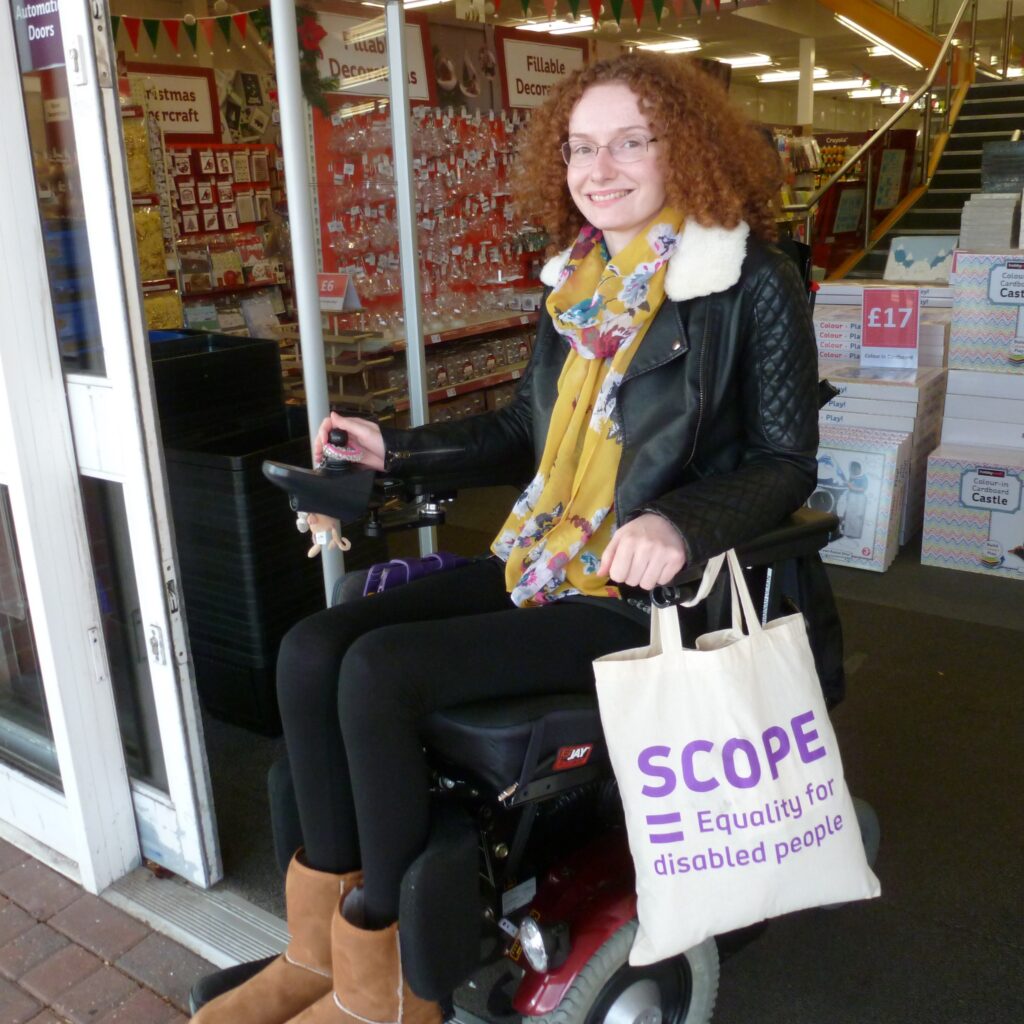
I’m Hannah, I am 30 years old and from Surrey, UK. I’m a powerchair user. I write a disability and lifestyle blog, Hannah’s Hope and work very part-time as a Finance Administrator following studying Association of Accounting Technicians (AAT) and gaining my MAAT status.
Following a healthy, happy and active childhood, I suffered an injury playing netball aged 14 which led to Complex Regional Pain Syndrome (CRPS).
It has been quite a journey from crutches, surgery, deteriorating mobility, becoming bedbound at 15, then 4 years in hospital, followed by 1 and a half years in a neuro centre/ care home to coming home again but with a high level of disability. (That is a highly summarised version!)
Along the way, I have got secondary complications of Hypermobility Syndrome (which officially, I believe should be called Hypermobility Spectrum Disorder), Functional Neurological Disorder/spasms and Osteoporosis. I also suffered a spiral fracture of my femur and so my femur has a metal plate, pins and screws holding it all together.

Complex Regional Pain Syndrome
My Complex Regional Pain Syndrome is so much better now than it was. Although I still suffer very severe pain, hypersensitivity, poor circulation, discolouration, spasms and poor temperature control. Nevertheless, I think the reduction in mobility, muscles, movement, Osteoporosis, spasms and more are caused by it and the effect the illness has had on me.
When I was younger, I was totally bedbound for 3 and a half years, had contractures of my legs, was in extreme pain, and could not bear touch, clothing or water on my legs. I had a feeding tube and much more.
Previously, Great Ormond Street Hospital has said it is the most painful condition they treat.
I think daily physiotherapy, regular hydrotherapy and general slow stream rehabilitation and desensitising is what has helped me. However, it is by no means easy and I still need to take very strong painkillers to get me through my day.
Hypermobility Syndrome/Hypermobility Spectrum Disorder
Regarding Hypermobility Syndrome I think I am fairly lucky. Maybe I was always a bit flexible, however, I was never diagnosed and as so many people who are ‘hypermobile’ it doesn’t cause problems and they may even use it to their advantage e.g. being a gymnast or ballerina.
However, there are many people who either after injury or in general are so much more than ‘just’ flexible and have hypermobility syndrome and are really unwell and disabled by it. It can cause dislocations, pain, fatigue, gastroparesis, bowel issues and more. Fortunately for me, I only have some subluxations (although they are still very painful), some unstable joints and a lot of problems with one shoulder and arm.
My understanding is weakness combined with the joint being unstable has caused tightness. To the point where if my muscles, tendons and ligaments were guitar strings, I think they would be looser and more comfortable!
Functional Neurological Disorder (FND)/Spasms)
Functional Neurological Disorder can also be very disabling. It can cause paralysis, weakness, spasms, blackouts, seizures, vision loss, sensory disturbance plus much more. It is a poorly understood condition.
I am lucky I have only experienced spasms and some weakness.
The best way to understand FND, is that if your body is a computer, your brain is the hardware and signals to your brain are the software. It is the software that is a problem, not the hardware. In theory, this is good as with intense rehabilitation there is the potential to reprogram the software. However, this is not an easy process.
Osteoporosis
Osteoporosis is not only a condition that affects older people. I had only just left my teenage years when I was diagnosed, having been bedbound for many years.
My bones were in a horrific condition. Luckily with specialist daily injections, followed by 6 monthly injections, followed by an infusion, my bones have been rebuilt and are now still fragile but so much better than they were.
Having fragile bones makes me more aware of the disastrous consequences of a fall, I would probably break a bone. Fortunately, I have never had a fall and I hope to keep it that way.
Plated Femur
When I was 20, I suffered a traumatic spiral fracture to my hip and femur. Post major surgery I had a large metal plate, pins and a screw through my femur and the ball of the hip. I had a massive protruding lump on the side of the top of my femur, restricted movement, terrible pain and a shorter leg.
At the age of 27 I had further major surgery – a valgus osteotomy (they took out the metalwork, rebroke my leg, rotated it out, took it down in the socket, chopped a bit of bone, realigned the angle and put a new metal plate and screws in) to try and improve the position, pain, movement, lump and leg length of the leg.
It has helped a lot but I do still have pain and some restriction in movement etc.
What Helps Me?
Stretching, massaging, swimming, exercises in the water (hydrotherapy), daily physiotherapy – bed exercises, standing exercises, moving position and medication. Rehabilitation with expert professionals. Trying to pace a bit. Heat packs and hot water bottles.
Have I Learned To Adapt To Having A Disability?
Yes, I have learnt to adapt to having a disability. It has been by no means easy. Seeing my peers achieve all the things I hoped to, and not achieving them myself is really hard. I am thrilled for them, nevertheless, each milestone they achieve makes my life feel further away from what is a reality in their lives.
I have taken a different path; I have had some great opportunities and met some incredible people. I have built a life. In the words of my Mum: “If you are going to France on holiday and end up going to Spain, if you spend the whole time wishing you were in France, you miss out on enjoying and maybe having a better time in Spain.”
Have I Changed As A Person From Before My Disability?
I think certain elements of myself are the same as before I had my disability; however, parts of me have definitely changed. I hope it has made me a better person. They say our experiences in life shape who we are and I think it is very true.
I feel I have more of a balanced insight of life and understand situations and experiences, I would not have encountered or been able to fully appreciate and comprehend if I had not become disabled. My Mum tells me I have experience and empathy beyond my years because of what I have been through.
I was always determined and patient but I would say these characteristics have had to increase in their strength to help me through my journey. I have learnt what truly matters in life.
My Favourite Superhero
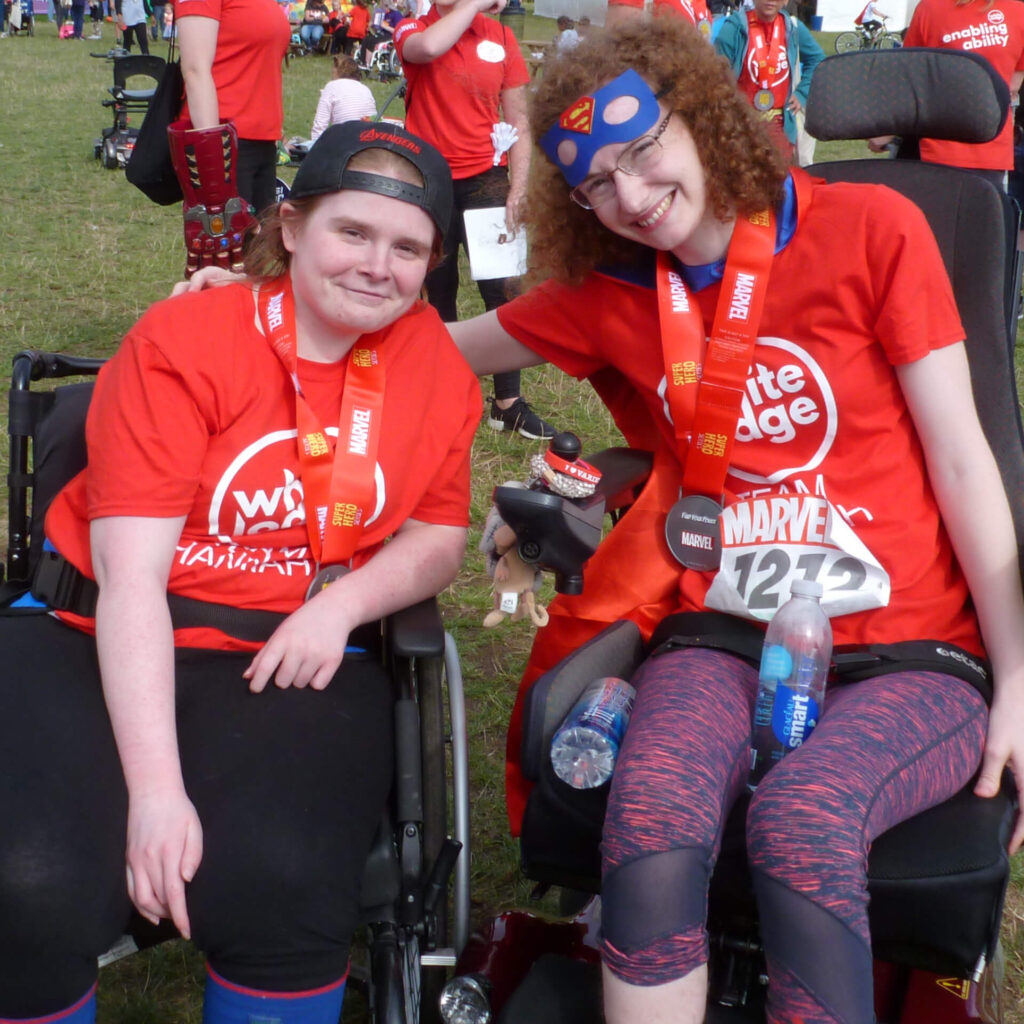
My favourite superhero is probably Superman, or should I say Supergirl! I am also particularly fond of an incredible superhero, superhero Ami. Her determination of walking a few steps over the finish line with me at the Superhero Tri in 2019 was incredible. Followed by being a superhero Mummy to Daisy!
To stay up to date with Hannah, you can find her on Facebook, Twitter, Instagram, and her blog, Hannah’s Hope!