‘The Reality Of…’ is a series with the aim to raise awareness of disabilities, illnesses, impairments, etc. Also, educating others about the barriers that disabled people and carers face. I hope this series helps to break down misconceptions and stigma.
Life doesn’t have to stop when you have a disability.
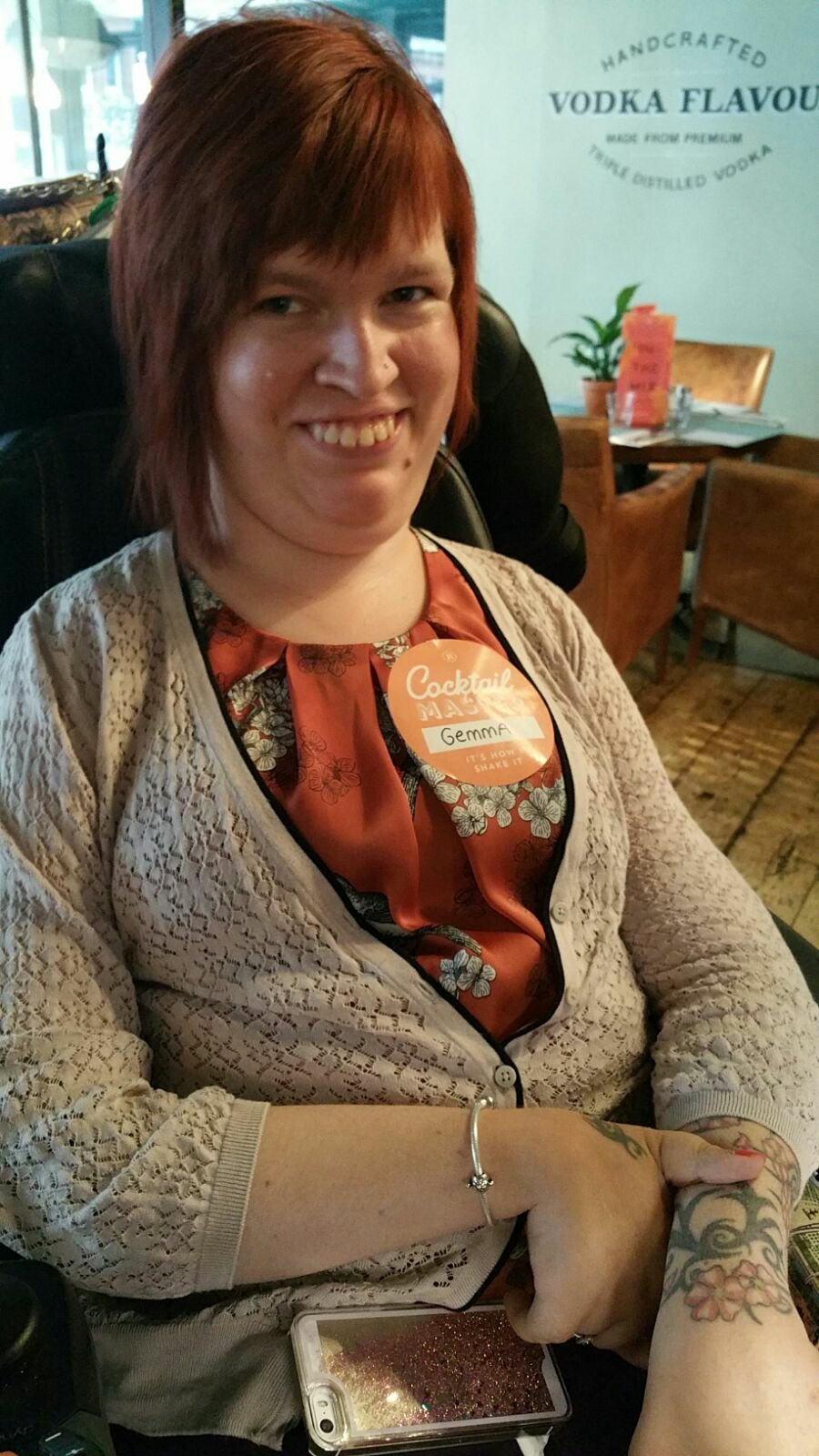
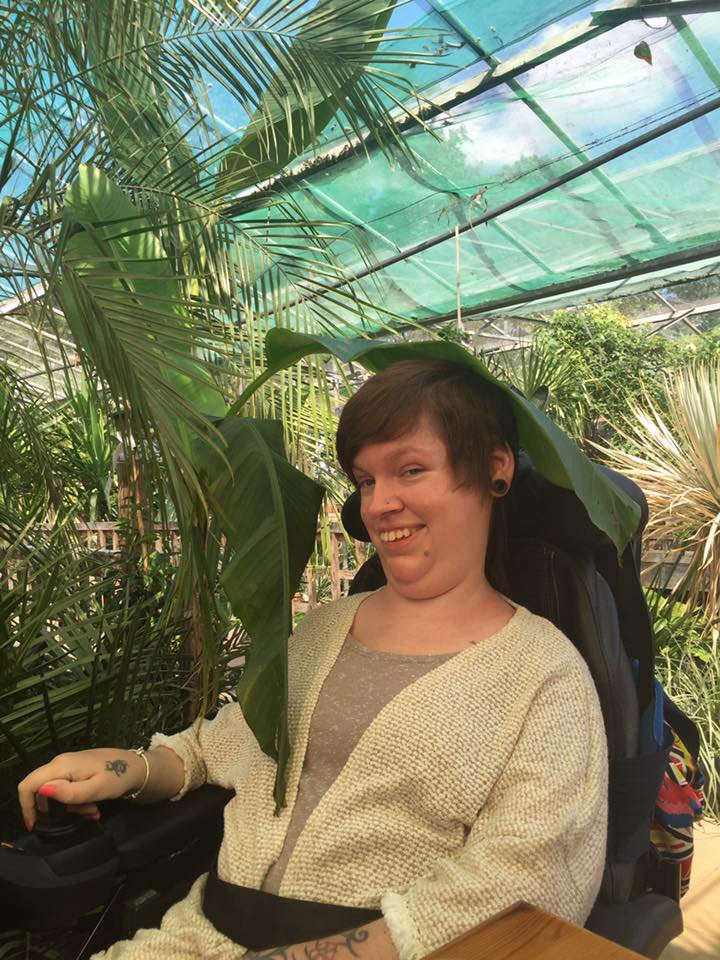
Meet Gemma
Hello, I’m Gemma and I’ve been blogging over at Wheelescapades for almost five years. I’ve always enjoyed being creative and had considered starting a blog many times. There’s lots people don’t really understand about disability, SMA (Spinal Muscular Atrophy) in particular, and it can make for quite the adventurous life. Not much goes smoothly when the world isn’t equipped for you.
I wanted to document my escapades and bring awareness to the obstacles I come across. Inaccessible buildings, badly designed venues, storage cupboard accessible toilets, broken lifts and never ending shingled pathways! With a hope to make people think, but also realise, that we are all just people wanting to get by in life, and enjoy it along the way.
I like to spend my time crafting, socialising with family and friends, going to festivals, watching live comedy and dining out. I’m also an avid tea drinker!
Spinal Muscular Atrophy
SMA is a genetic condition that causes progressive muscle weakness (atrophy) and loss of movement. Motor neurons (nerve cells) connecting the brain and spinal cord to muscles in the body, deteriorate. It affects the muscles used for walking, sitting, moving, swallowing and breathing. There are four main types of SMA, I have type 2, which is the second most severe and means that I was never able to crawl or walk.
Personally I believe that the lines between SMA types can blur. Each person, even those with the same type 2 as myself, can differ hugely in ability and progression. As you can see, I’m not the best at articulating the science-y stuff about SMA! My focus is how it affects my daily life, and how I can work with that.
Symptoms and Diagnosis
On the outside I am a full time wheelchair user, I have never been able to walk or crawl. On the inside, what’s not so visible, is the affect SMA has on my whole body. I was diagnosed with SMA Type 2 at 11 months old. I wasn’t reaching the usual milestones expected as a baby turns toddler. I struggled to keep down food and put on weight, I wasn’t able to sit unaided, and had very poor neck control. After being told multiple time that I was ‘just a lazy baby’ my Mum managed to be heard, a muscle biopsy was done, then a diagnosis given.
Back in the day (36 years ago) prognosis was bad and I was given a 2 year life expectancy. Medical treatment and technology have evolved. And I’m here typing this now. On my tiny phone, I might add. Because that’s what living with SMA is like.
How Spinal Muscular Atrophy Type 2 Affects Me
As an adult I have very limited movement and strength. I can use my hands and lower arms, but need things to be lightweight and within a fingers distance. Hence the typing on a tiny phone, when I also own a perfectly good laptop. Although I now get much of my nutrition via a feeding tube, I still enjoy eating (I mean who doesn’t?!) and like to indulge in regular afternoon teas. I’m a social eater, am pretty slow, and have mastered the art of eating crisps with a fork. I eat everything with a fork due to limited jaw opening and arm reach.
One of the most frustrating symptoms of SMA for me is the deterioration of my breathing. I now require a BiPap non-invasive ventilator to assist me to breathe while sleeping or if I’m unwell and feeling particularly fatigued. It’s not the wearing of this that bothers me, but the susceptibility to chest infections. Due to progression in weakness of my breathing muscles, I have an almost non existent cough. A simple cold could turn to pneumonia, and last year I landed in hospital with flu. Respiratory physio, BiPap use, breathing exercises and prompt use of antibiotics is key as soon as I start to feel unwell.
I have a team of Personal Assistants that enable me to live as independently as possible. They help with all of life’s tasks including, washing, dressing, cooking, fetching, driving, accompanying and supporting. I’m undecided if it’s like having an entourage to grant my every wish, or a group of weird stalkers. A bit of both probably.
Up until very recently there has never been any treatment or medication specific to Spinal Muscular Atrophy. It has always been about managing the symptoms with physio, and using medical interventions for breathing and feeding. It has been a matter of working out how you can support the progression.
Now, though, treatments for the actual condition are being developed, trialled, and used. I started a new medication, Risdiplam, a couple of months ago. This enables the body of a person with SMA to produce a protein that it has never been able to before. With an aim of halting progression. This medication is not yet available on the NHS, and I only have access to it via EAMS for the time being. It’s early stages for myself, but the results seen in children really are amazing.
Learning to Adapt
If there’s one thing SMA has taught me, it’s that there is almost always a way. Having very limited movement is a frustrating challenge, there’s no denying that I would often prefer a simpler life. One in which I can make my own brew and style my own hair.
I’ve always lived with Spinal Muscular Atrophy, so it’s been a life of adapting along with the progression. When I lost the ability to write with my right hand, I learned to start using my left. When at art school I couldn’t reach the easel, I made a makeshift one on my desk. When I then couldn’t reach the top of the page, I turned it upside down and completed it that way. When the laptop keyboard was bigger than my reach, I got a cool app so that I could type on my phone and it appeared on the laptop screen. When I couldn’t bite into a burger anymore, I ate it in layers. Next I cut it up and used a fork.
Technology really has made the world much more accessible. With just my phone and Alexa Dot I can control the tv, make calls, send a message, read a book, write this post, learn a new craft and do the daily crossword. If only the rest of the world adapted just as easily and quickly. I am constantly frustrated with the inaccessible environment of steps, narrow doors and peoples assumption of who I am and what I can (or cannot is probably more accurate) do.
Have I Changed As A Person?
Having always lived with SMA it’s difficult to know the person I would have been without it. I like to think, fundamentally I am and always would have been the same person, as in beliefs and personality. But there is no doubt that SMA has had an influence on my life. Not necessarily in a negative way. My physical limitations have made me think creatively in terms of looking outside the box, but also in terms of my interests. Art is something I have always enjoyed, it’s where I feel free and it is something I have control over.
Living with SMA has probably encouraged me to appreciate things differently. I’m all about the details, the little things in life. The big stuff, like relationships, having kids, career choices. It’s sure to have been different. Just like with any of us, each tiny event or decision we make sparks another, which makes a life what it is.
I’d like to have travelled the world. That’s for sure. I guess really though, we will never know.
My Favourite Superhero
I’ve always been a Batman fan, I remember, as a child, watching the 60’s tv series with Adam West and Burt Ward (I wasn’t born in the 60’s, they must have been on again in the 90’s!) with all the ‘Ka-pow!’ -ing and gadgets. I reckon he could create me a pretty cool Batmobile inspired wheelchair with extendable arms and a built-in tea maker.
Thank you so much Gemma for raising awareness!
If you would like to stay up-to-date with Gemma, then you can find her on Twitter, Facebook, Instagram, and her blog, Wheelescapades!